
Southern North Sea
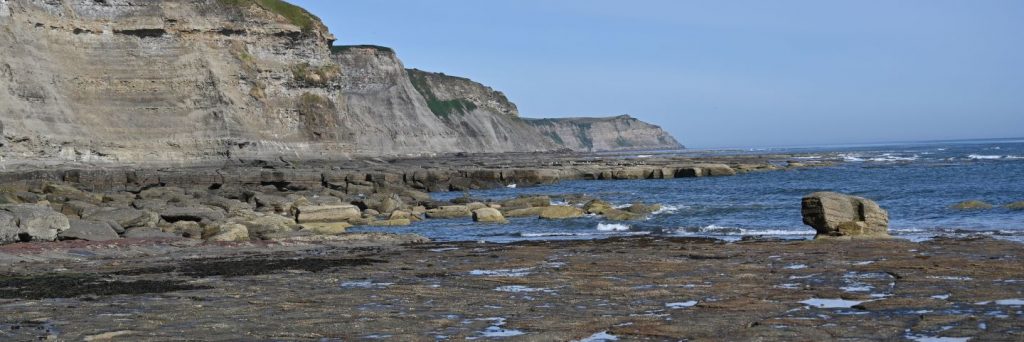
The Southern North Sea represents an important regional location for geological carbon storage as countries bordering the basin look to sequester industrial CO2 emissions, either in depleted gas reservoirs or saline aquifers, in order to meet national and intergovernmental Net Zero 2050 targets. CASP research is initially focusing on characterising both the reservoir and primary seal components of the Bunter Sandstone CO2 storage complex in the UK and Dutch sectors of the Southern North Sea. The results of this research will aid the interpretation of site-specific studies within and between licence blocks while also providing unique analogue studies of understudied primary seal units. Secondary seals within the sedimentary overburden play a crucial role in ensuring the integrity and containment of geological carbon storage sites. To this end, CASP research is also conducting a detailed multiscale characterisation of lithological and compositional heterogeneity of the UK Lower Jurassic to determine the impact such variation has on seal potential. Additional research opportunities in other jurisdictions and stratigraphic intervals are being actively considered.
Map of Region
Most Recent Reports
- Mechanical stratigraphy and fault damage zones impacts on a Lower Jurassic mudrock seal analogue, Cleveland Basin, UK
- Investigating the impact of heterogeneity in mudrock seals, via the multiscale-multiproxy characterisation of the lowermost Lias Group, Cleveland Basin, UK
- Cyclostratigraphy of the Lower Triassic, Southern North Sea Basin: implications for the Bunter Sandstone CO2 storage complex
- Reservoir sedimentology, composition and diagenesis of the Bunter Sandstone Formation in the Southern North Sea
- Composition and sealing capacity of the Haisborough Group in the Southern North Sea